How Often You Should Clean a Roof in the Pacific Northwest Climate
You should clean a roof in the Pacific Northwest climate every 2 to 3 years with a full professional soft wash, and more often if your home sits under heavy tree cover or in constant shade. Moss and algae thrive in our damp, cool environment. Left alone, they hold moisture against shingles and shorten the life of your roof.
Homes in Vancouver, WA and surrounding areas deal with long wet seasons, dense evergreens, and limited direct sun. North-facing slopes often grow moss faster than the rest of the roof. Some properties need touch-up treatments between full cleanings.
Regular soft washing removes organic buildup at the root and slows regrowth. That means fewer repairs and fewer surprises.
For dependable roof care tailored to the Pacific Northwest climate and a free estimate, contact NW Softwash! Professional Roof Cleaning that protects your home has never been easier
Why Pacific Northwest Roofs Need Regular Cleaning
Pacific Northwest roofs need regular cleaning because constant moisture feeds moss and algae growth almost year-round. Rainfall stays high. Shade lingers. Organic debris collects and stays damp for months.
Moss roots dig into asphalt shingles and lift their edges. Water then slips underneath and weakens the roof deck over time. Algae create dark streaks that trap heat and reduce curb appeal.
Several factors increase the need for routine cleaning:
- Roof orientation, especially north-facing or shaded slopes
- Nearby tree cover that drops needles and limits airflow
- Roofing material, with asphalt shingles being more vulnerable
- Rainfall intensity and the length of the wet season
Homes surrounded by fir trees or sitting near wooded areas often see moss growth within a year. Open, sunny properties stretch closer to that 3-year range.
Every few years works as a strong default benchmark in our region because it interrupts growth before structural damage begins. Stay ahead of the cycle and the roof lasts longer.
Typical Roof Cleaning Frequency by Roof Type and Exposure
Roof cleaning frequency depends on material and exposure. Asphalt shingles under trees often need more attention than roofs in open sun.
Recommended Cleaning Frequency by Roof Type
- Asphalt shingles in shaded zones — every 2 years
- Asphalt shingles in exposed zones — every 3 years
- Tile roofs — every 3 to 4 years depending on buildup
- High-shade or tree-covered areas — inspect 1 to 2 times per year and treat moss early
Asphalt shingles hold moisture and organic debris more easily. Moss attaches quickly. Tile roofs can also collect algae over time.
Annual inspections help homeowners adjust the schedule. A quick visual check from the ground can reveal green patches or dark streaks. Professional inspections go deeper and identify early lifting or soft spots.
Cleaning too late leads to repairs. Cleaning on schedule protects the investment.
Signs Your Roof Needs Cleaning Before the Routine Date
A roof often signals when it needs attention. Watch for visible changes and act early.
- Moss patches that appear thick or spongy
- Black streaks running down shingles
- Debris buildup in valleys or along ridgelines
- Gutters filling quickly with roof runoff and organic matter
- Shingles that curl, lift, or look uneven
Moss that looks light and dusty often wipes away easily during treatment. Thick growth that forms clumps requires more time and care. Catch it early and the process stays straightforward.
Gutter overflow during heavy rain often points back to roof debris. Clearing the roof helps restore proper drainage.
Homeowners who notice lifting shingles or sagging sections should schedule service promptly. Early cleaning limits moisture damage and extends the roof’s usable life.
Small problems grow fast in our climate. Staying proactive keeps repairs off your calendar and protects the structure above your head.
How Professional Soft Washing Protects Your Roof
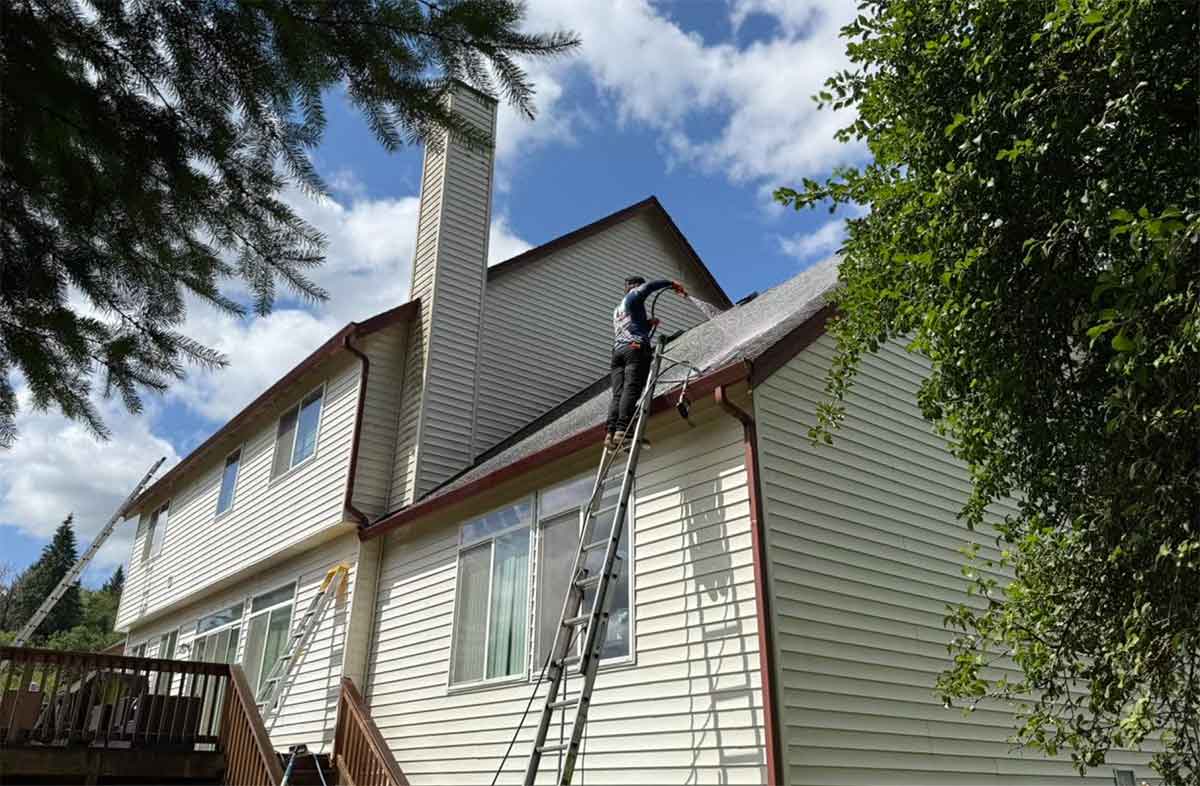
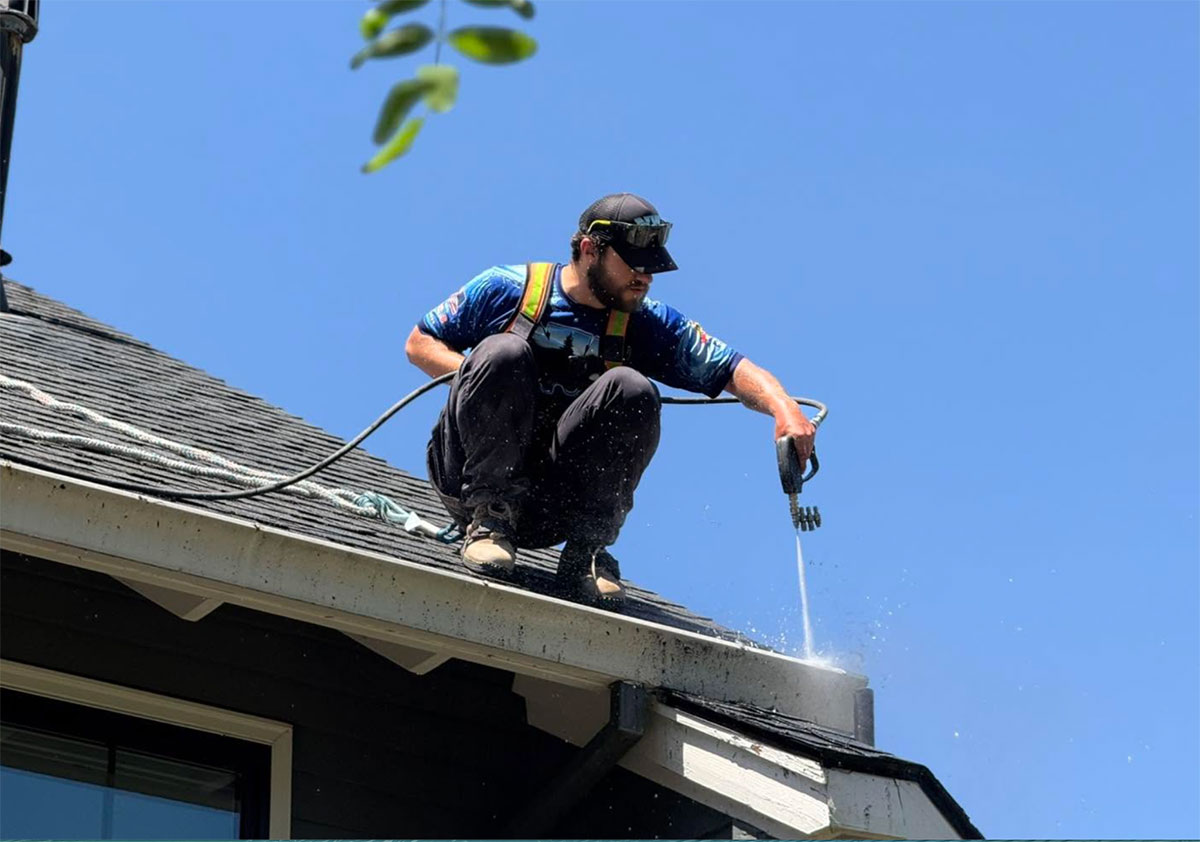
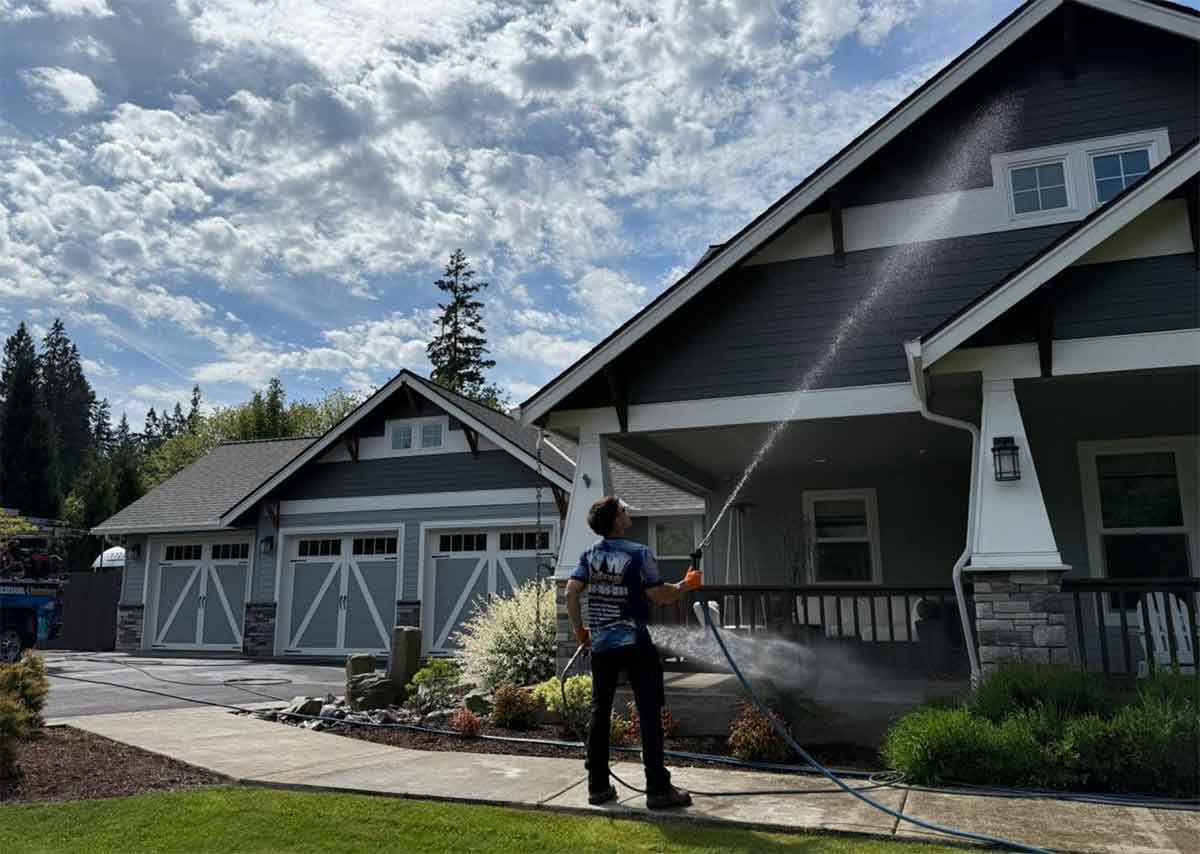
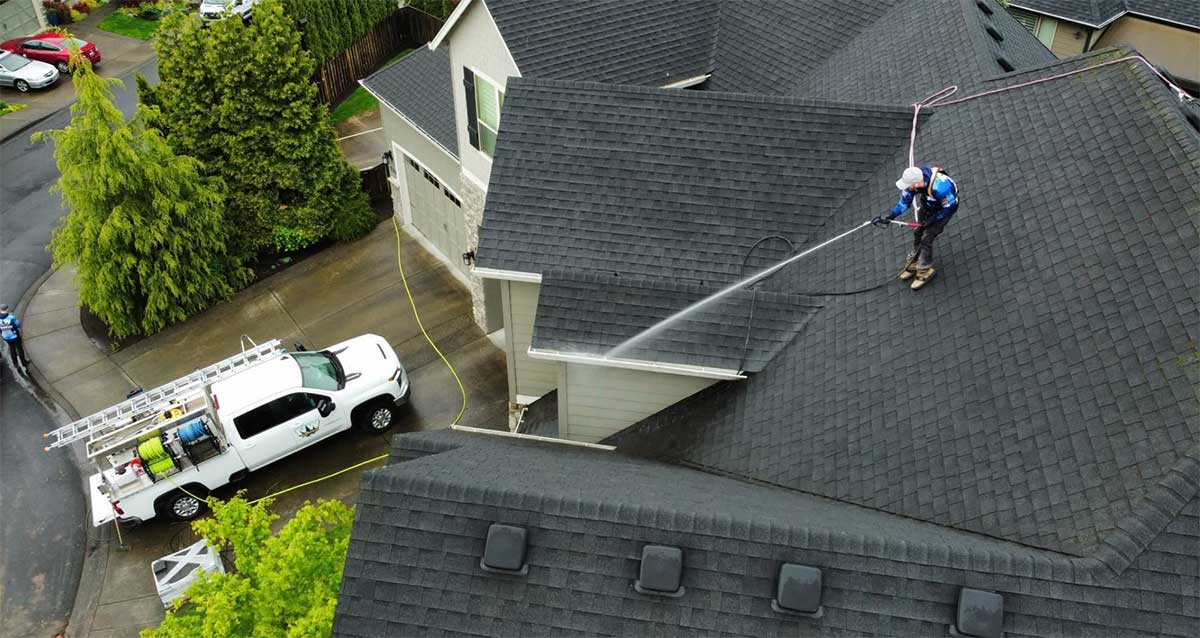
Professional soft washing protects your roof by removing moss and algae without damaging shingles. High-pressure washing strips granules from asphalt shingles and forces water beneath them. That shortens roof life fast. Soft washing uses low pressure and targeted cleaning solutions that break down organic growth at the root.
Homeowners sometimes rent pressure washers and hope for the best. One wrong angle can lift shingles or crack tile. Repairs cost far more than proper cleaning.
Professional soft washing offers clear advantages:
- Removes moss, algae, and organic buildup safely
- Preserves shingle integrity and surface granules
- Reduces regrowth with preventative treatment solutions
- Improves curb appeal and overall property value
- Minimizes long-term maintenance costs
Trained technicians understand roof pitch, material type, and safe chemical application rates. They use proper fall protection and follow a controlled process from start to finish. You stay off the ladder. Your roof stays intact. That peace of mind matters.
Timing Roof Cleaning Around PNW Seasons
Late spring through early fall offers the best window for roof cleaning in the Pacific Northwest. Moss growth slows as temperatures rise and rainfall decreases. Surfaces dry faster, which improves treatment performance.
Spring works well after the wet season. Technicians can remove winter buildup before summer heat sets in. Early fall also provides a smart window before heavy rains return.
Avoid peak winter months when roofs stay saturated and slippery. Cold weather reduces treatment effectiveness and increases safety risks.
Plan ahead if you live under dense tree cover. Scheduling before the rainy season helps limit heavy moss growth. A quick annual inspection keeps you on track and prevents last-minute problems when storms roll in.
NW Softwash & Roof Cleaning in Vancouver WA — Roof Cleaning in the Pacific Northwest Climate
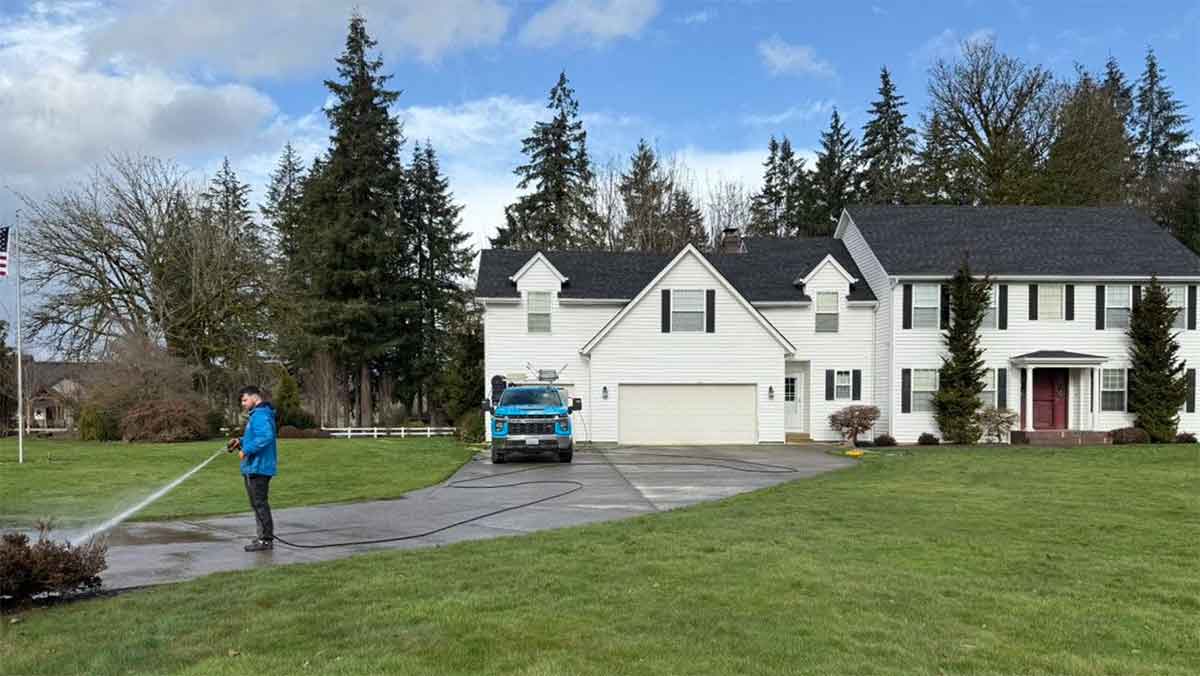
Homeowners in Vancouver, WA face steady rainfall, shaded lots, and thick evergreen debris. Roof maintenance here requires local knowledge and the right method. Our team understands how Pacific Northwest conditions affect different roofing systems.
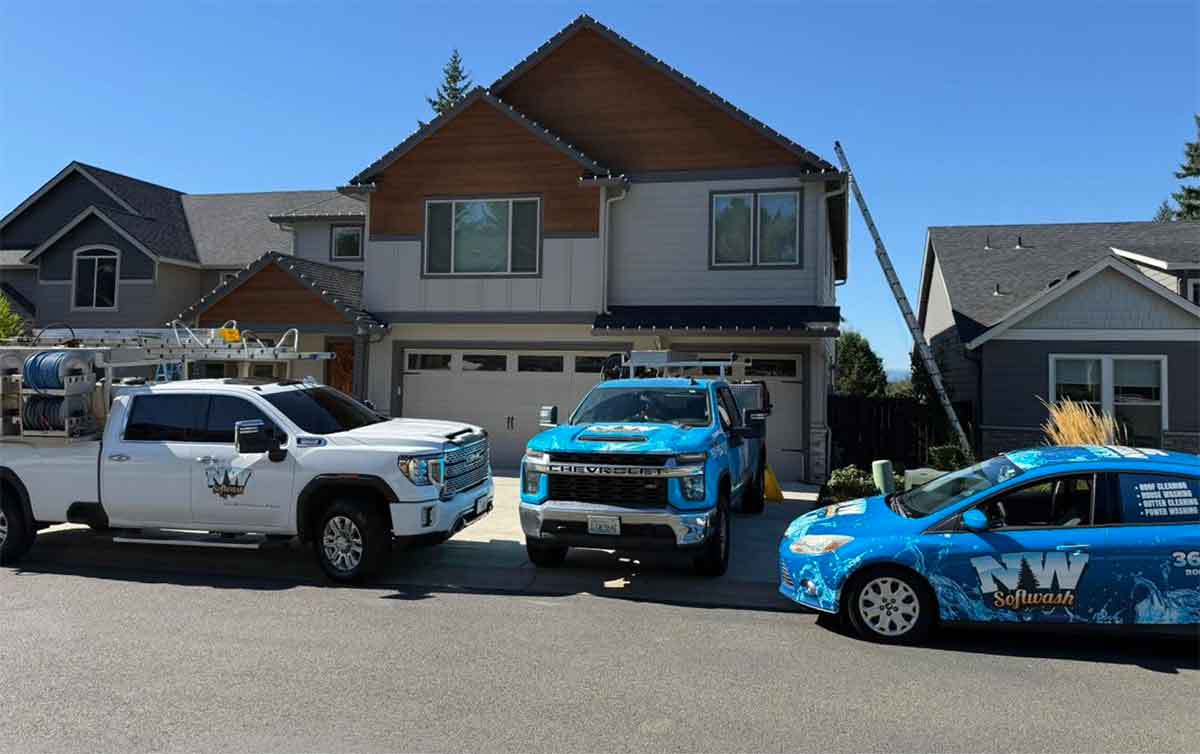
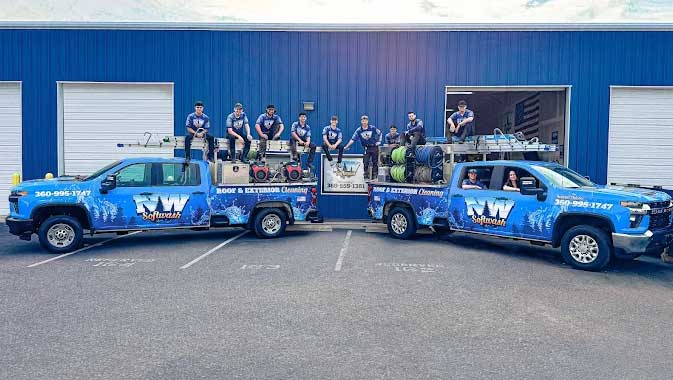
NW Softwash & Roof Cleaning provides roof cleaning in the Pacific Northwest climate using proven soft wash techniques tailored to each home. We evaluate roof type, slope, exposure, and moss density before starting any work. Clear communication matters to us. So does showing up on time and doing the job right.
Homeowners throughout Clark County trust our process because it works. Learn more about our approach and request a quote at nwsoftwash.com.
FAQs: Roof Cleaning in Vancouver WA
How often should a roof be cleaned in Portland or Vancouver WA?
Roofs in Portland and Vancouver WA should be professionally cleaned every 2 to 3 years, with more frequent service for shaded or tree-covered properties. Heavy moss growth may require earlier treatment.
Does roof cleaning extend roof life?
Roof cleaning extends roof life by removing moss and algae that trap moisture and lift shingles. Reducing organic buildup helps prevent leaks, rot, and premature shingle failure.
Is professional roof cleaning safe for all shingle types?
Professional roof cleaning is safe for most shingle types when technicians use soft washing methods and material-specific treatments. Asphalt shingles benefit most from low-pressure cleaning that protects surface granules.
Can I clean my roof myself in the Pacific Northwest?
Cleaning your own roof in the Pacific Northwest carries safety risks due to steep slopes and slick surfaces. Improper pressure or chemical use can damage shingles. Hiring trained professionals reduces injury risk and protects your roof investment.