How Do You Keep a Driveway and Walkways Looking New?
Keeping concrete surfaces looking new requires periodic professional cleaning to remove biological growth, staining, and embedded dirt — followed by a preventative treatment that slows moss and algae from returning. A wash-only approach without treatment leaves the surface vulnerable to rapid regrowth.
Concrete is one of the most overlooked exterior surfaces. Most homeowners address siding and roofs before driveways and walkways even come to mind.
In Portland and Vancouver, moss and algae colonize concrete quickly. Shade, persistent moisture, and organic debris from tree canopies create ideal conditions for biological growth on horizontal surfaces year-round.
If your driveway or walkways are overdue, concrete cleaning from NW Softwash includes the preventative treatment that keeps them cleaner longer.
Why Concrete Gets Dirty Faster in the Pacific Northwest
Portland and Vancouver’s climate does not give concrete surfaces much of a break. Persistent rainfall keeps surfaces damp for months at a time, shade from dense tree canopies blocks the UV exposure that naturally inhibits algae, and mild year-round temperatures mean biological growth never really dies back seasonally.
Concrete’s porous surface makes things worse. Moss and algae anchor into the material rather than sitting on top of it, which is why hosing a driveway down does little beyond moving the problem around temporarily.
Most regions deal with dirty concrete periodically. The PNW deals with it continuously.
What Builds Up on Concrete Driveways and Walkways Over Time
A lot of homeowners assume their driveway just looks old. Often it is a buildup problem, and the fix is simpler than replacing concrete. Here is what actually accumulates:
- Green or black algae growth — colonizes shaded and damp sections, creates slip hazards on walkways
- Orange or brown moss patches — common along edges and expansion joints where moisture collects
- Tannin staining — dark streaking from leaves, pine needles, and tree debris breaking down on the surface
- Oil and fluid stains — vehicle drips that penetrate into the concrete surface over time
- Efflorescence — white chalky mineral deposits that rise through the concrete from below
- Embedded dirt and tire tracking — surface grime that routine hosing cannot lift
Our concrete cleaning service targets dirt, moss, algae, and organic buildup. Oil and fluid stains, efflorescence, and other non-organic discoloration may not be included as part of the service. Let us know about specific stains when requesting your quote.
Is Concrete Cleaning Just Pressure Washing?
No — effective concrete cleaning involves more than pressure washing alone. A standard pressure washer rental displaces surface debris but does not treat biological growth or leave any protective layer behind. The algae and moss return within weeks.
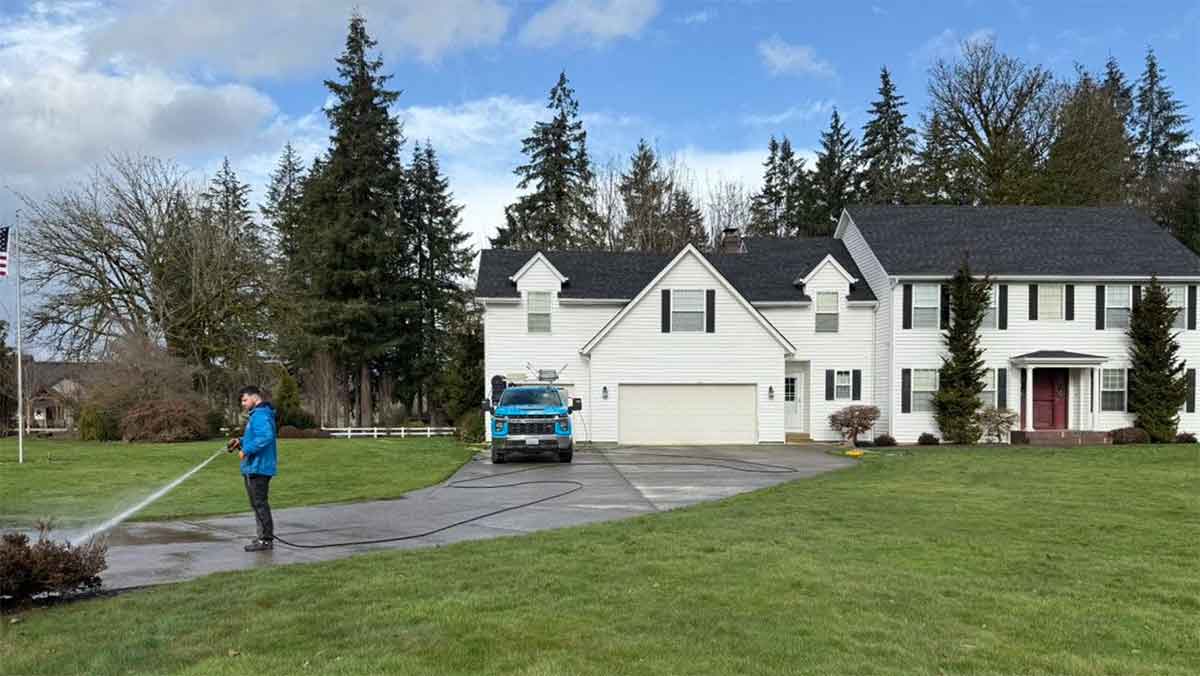
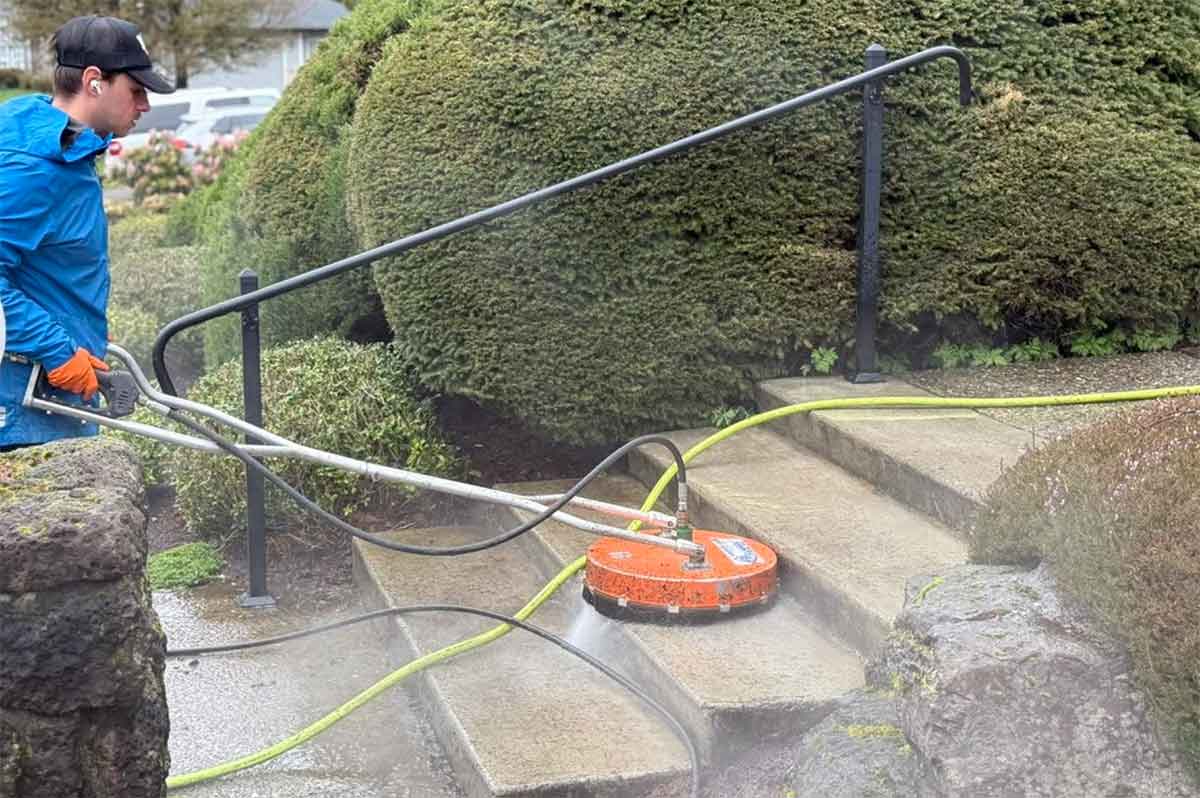
NW Softwash’s concrete cleaning process works differently. A surface cleaner covers the full area evenly, a wand handles cracks and edges where a surface cleaner cannot reach, a full rinse clears all loosened debris, and a finishing preventative treatment is applied to inhibit moss and algae regrowth.
Every step matters. Skipping the preventative spray is the difference between a clean driveway that lasts and one that looks the same again by next spring.
How a Preventative Treatment Keeps Concrete Cleaner Longer
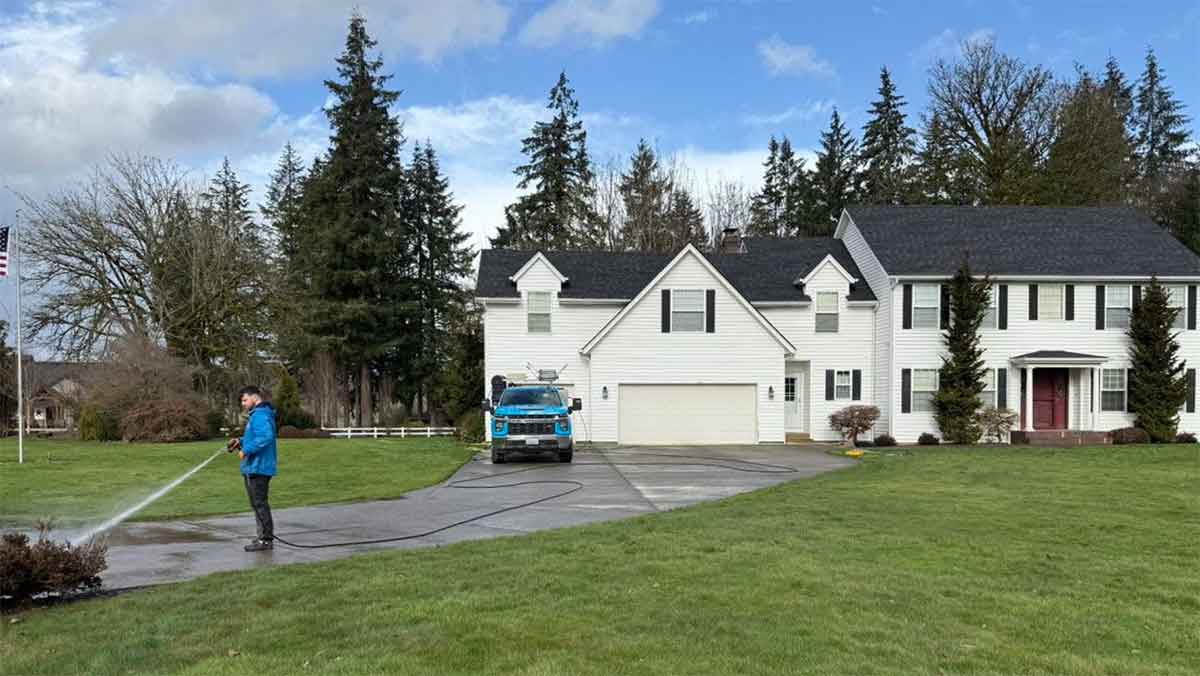
The post-clean preventative spray NW Softwash applies after every concrete cleaning inhibits biological regrowth directly on the surface. In the PNW, untreated concrete can show new algae growth within a single wet season.
The treatment extends the clean appearance significantly — and gives homeowners a longer interval before the next cleaning is needed. It is the step most DIY approaches skip entirely, which is why professional results last longer than a rented pressure washer ever will.
This treatment is part of the cleaning process; it is not a concrete sealer. NW Softwash offers concrete cleaning, not concrete sealing.
How Often Should You Have Your Driveway and Walkways Professionally Cleaned?
Most Portland and Vancouver homeowners benefit from professional concrete cleaning every one to two years. Heavily shaded driveways or properties surrounded by mature trees typically need annual treatment.
Surfaces that receive the post-clean preventative spray consistently stretch toward the longer end of that range. The treatment does meaningful work between cleanings, slowing the regrowth that would otherwise bring the next appointment forward.
Annual or biennial cleaning is a low-effort habit compared to concrete resurfacing or replacement.

Concrete Cleaning in Vancouver, WA and Portland, OR — NW Softwash
NW Softwash delivers a complete concrete cleaning process — surface cleaner on the full area, wand detailing on cracks and edges, full rinse, and preventative treatment — to driveways and walkways across Portland and Vancouver.
Every technician is background checked, trained, and part of a team with over 20 years of collective exterior cleaning experience. Over 1,500 five-star Google reviews reflect the consistency of that work.
Call or text NW Softwash for a fast quote and get a response within 30 minutes during business hours.
FAQs: Concrete Cleaning and Driveway Maintenance
How do you keep a concrete driveway looking new?
Periodic professional cleaning removes embedded biological growth, staining, and debris that routine hosing cannot address. A post-clean preventative treatment slows moss and algae from returning and extends the clean appearance significantly longer.
How often should concrete driveways be professionally cleaned?
Most Portland and Vancouver homeowners benefit from professional concrete cleaning every one to two years. Shaded driveways with heavy tree coverage typically need annual treatment.
Does pressure washing damage concrete?
High-pressure washing applied incorrectly can etch soft concrete and damage expansion joints. A surface cleaner attachment and properly calibrated PSI protect the surface while delivering a thorough clean.
What causes green stains on concrete driveways?
Green staining is typically algae colonizing the porous concrete surface. Shade and persistent moisture in the Pacific Northwest create ideal conditions for algae to establish quickly on driveways and walkways.
Does a preventative treatment after cleaning actually help?
A post-clean preventative spray inhibits biological regrowth and extends the clean appearance significantly longer than washing alone — particularly valuable in high-moisture climates like Portland and Vancouver.