How to Clean Moss Off a Roof in Washington: DIY vs Professional Roof Cleaning
You can clean moss off a roof using manual removal and moss treatment solutions, but in Washington’s wet climate professional soft washing provides safer and longer-lasting results.
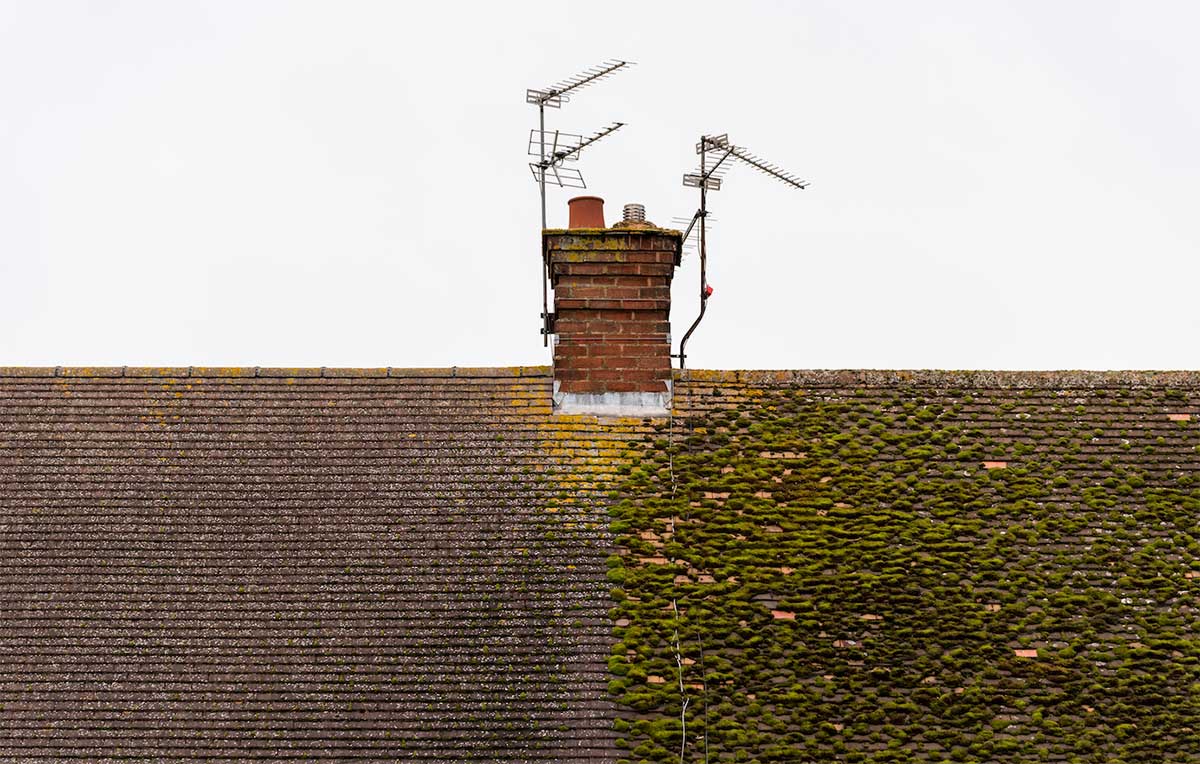
Moss thrives here. Constant rain, shaded roofs, and tree debris create ideal growing conditions. Light surface growth may respond to brushing and store-bought moss killers. Heavy buildup often requires deeper treatment.
Improper cleaning can damage shingles quickly. Aggressive scraping removes protective granules. High pressure forces water beneath roofing materials. Repairs cost far more than routine maintenance.
Professional soft washing treats moss at the root without harming shingles. It also slows regrowth in our damp climate. Long-term protection matters, especially in Washington.
NW Softwash & Roof Cleaning maintains a 4.9 rating across 1,371 Google reviews.
Homeowners trust our process because it works. Schedule professional roof cleaning with NW Softwash & Roof Cleaning for safe, effective moss removal that protects your investment.
Step-by-Step: How Homeowners Attempt DIY Moss Removal
Homeowners typically follow a structured process when attempting DIY moss removal.
Preparation comes first. Dry weather matters. Stable ladder placement and roof harness systems reduce fall risk.
Skipping safety steps leads to serious injuries.
Manual brushing removes loose moss. A roof-safe brush with soft bristles helps limit granule loss. Brushing must follow the direction of the shingles to prevent lifting edges. After brushing, many homeowners apply a moss-killing solution using a garden sprayer. Zinc strips or powder sometimes follow to slow regrowth.
Gutter cleanup comes next. Moss and debris wash into drainage systems and block water flow. Final steps include monitoring the roof over the following weeks for regrowth.
Common DIY mistakes include:
- Using pressure washers that strip granules
- Scraping upward against shingle grain
- Walking directly on steep slopes without proper footing
- Applying overly concentrated chemicals that damage landscaping
The Risks of Cleaning Moss Off a Roof Yourself
Roof cleaning carries real safety risks. Falls remain one of the leading causes of home improvement injuries. Sloped surfaces covered in algae and moisture become extremely slick, especially in Washington where damp conditions linger.
Granule loss poses another concern. Asphalt shingles rely on granules to block UV rays. Aggressive brushing or pressure washing shortens roof life. Improper pressure can also drive water beneath shingles, which leads to hidden leaks and decking damage.
Manufacturer warranties sometimes exclude damage caused by improper cleaning methods. A mistake today can affect coverage later.
Chemical runoff presents another issue. Strong treatments can harm landscaping or stain siding if not applied correctly. Washington roofs often remain damp under moss colonies, which increases slip risk and treatment challenges.
Risk increases when homeowners underestimate roof pitch or moss thickness. Caution matters. So does proper training.
How Professional Roof Cleaning Removes Moss Safely
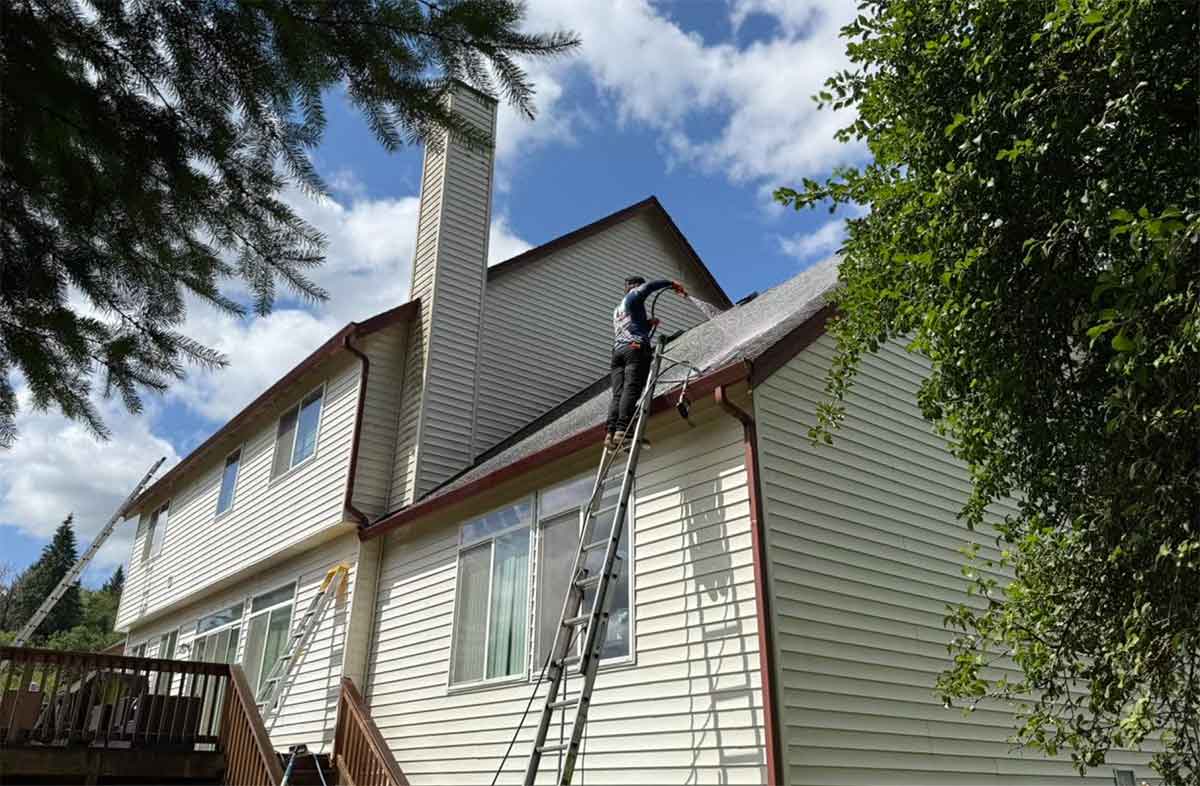
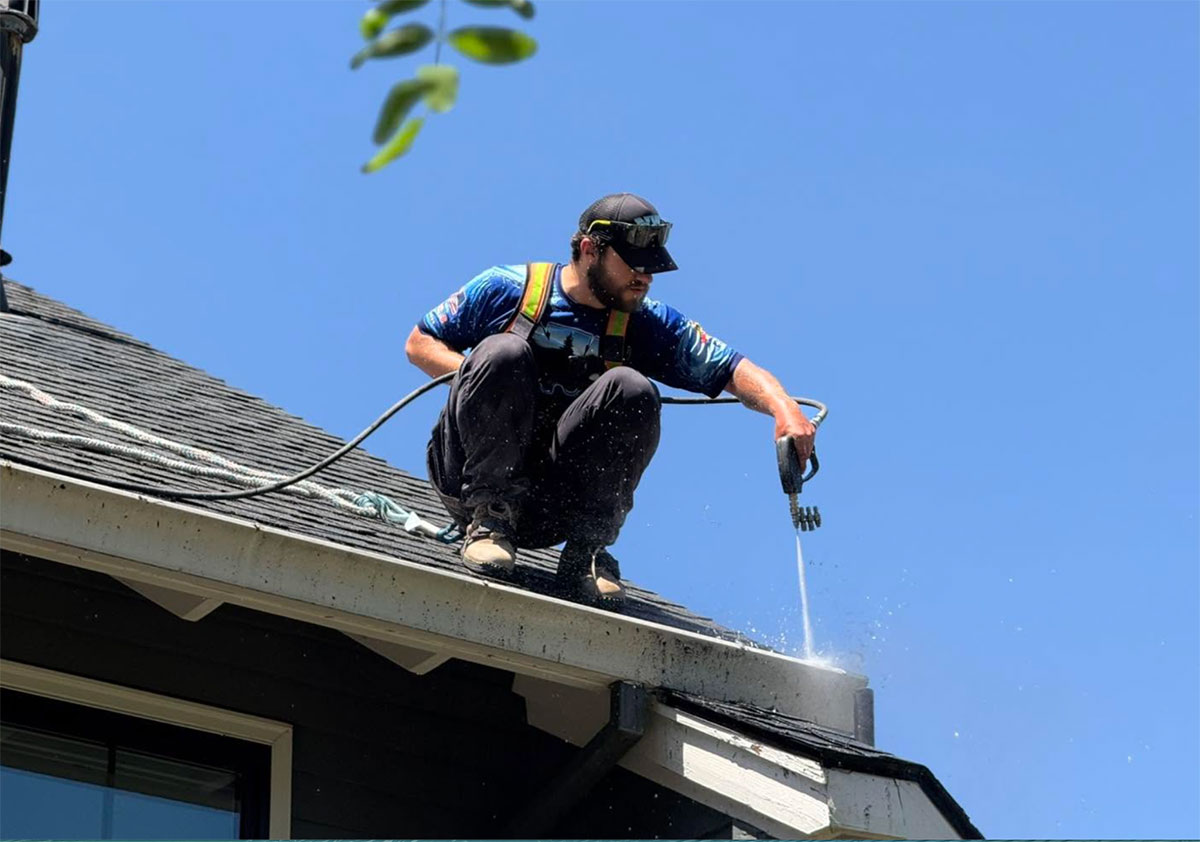
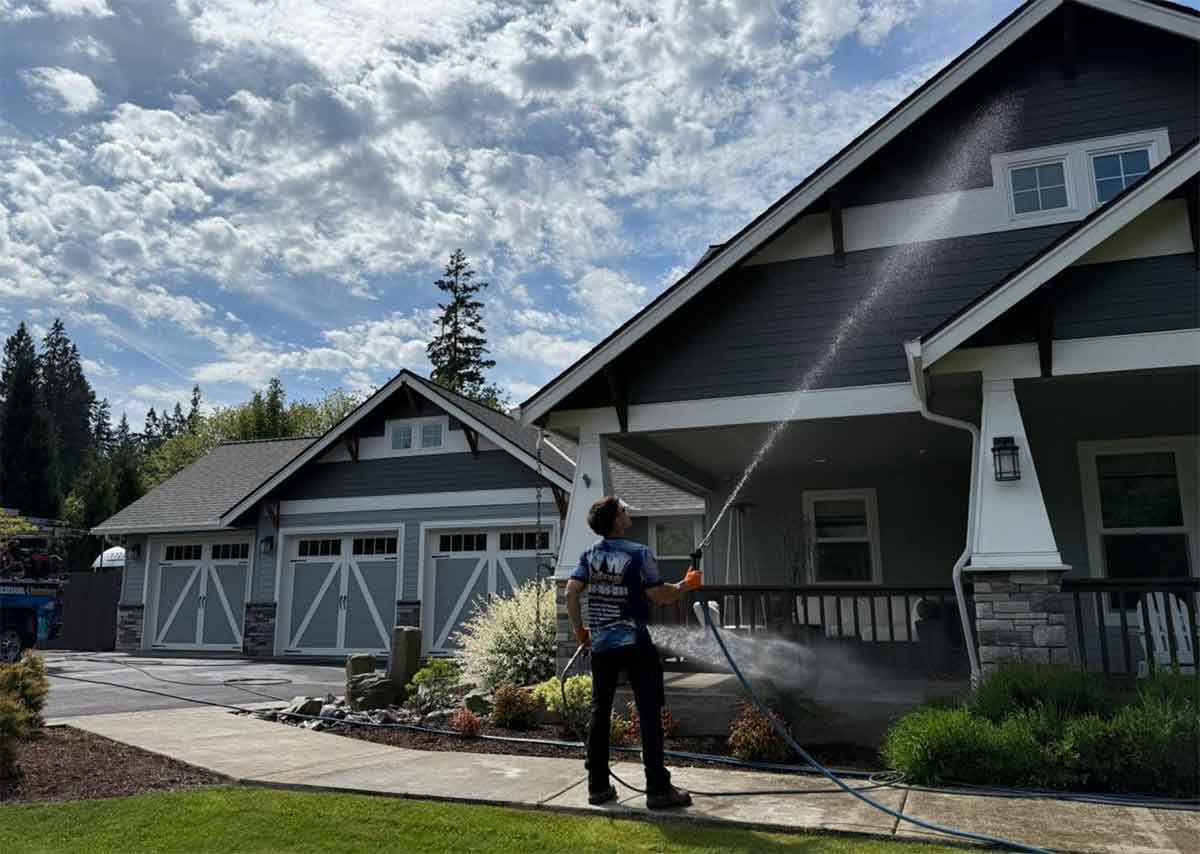
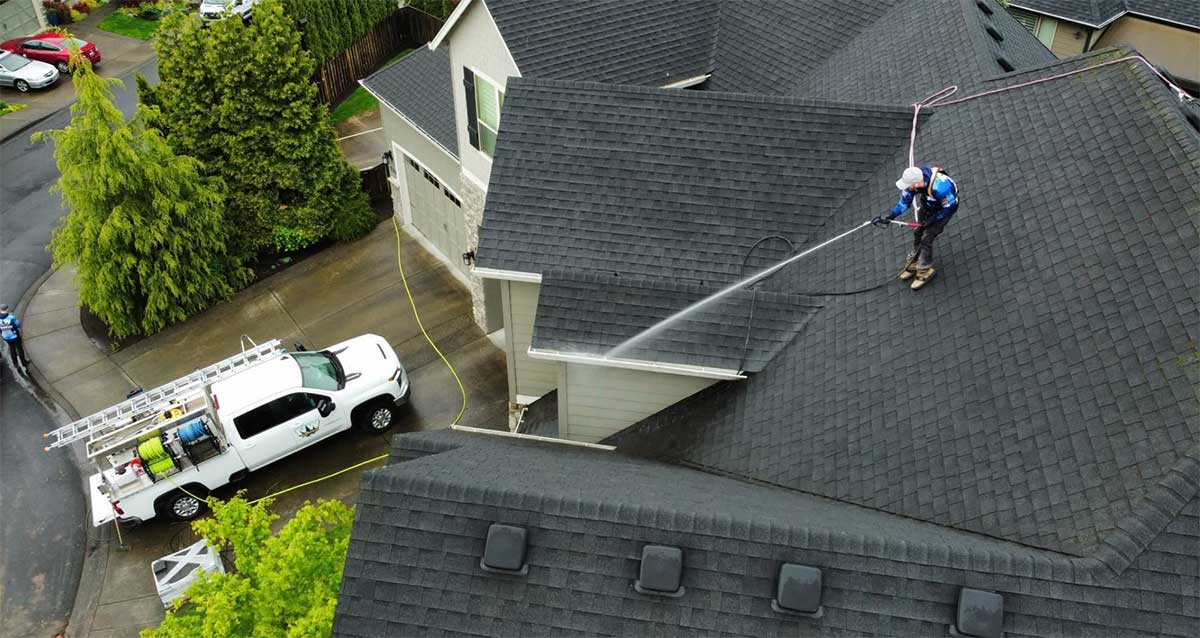
Professional roof cleaning uses a soft wash process designed to remove moss without damaging roofing materials. Technicians apply low-pressure solutions that penetrate moss colonies at the root level. Growth dies gradually and releases from the surface without scraping or blasting.
Protective measures guard surrounding landscaping and gutter systems during treatment. Crews pre-wet sensitive plants and control runoff. Safety equipment includes harness systems, roof anchors, and specialized footwear for secure footing.
Soft washing produces longer-lasting results because it targets spores beneath visible growth. Reduced regrowth means fewer service visits over time. Shingle surfaces remain intact because pressure stays controlled.
Trained technicians understand roof structure, pitch, and material differences. Proper application protects asphalt, tile, and metal systems alike.
Professional cleaning focuses on effectiveness and material preservation rather than quick surface removal.
DIY vs Professional Roof Cleaning: Cost Comparison
DIY roof cleaning may look cheaper at first glance. Costs often include equipment purchase or rental, moss treatment chemicals, protective gear, and your own time. Renting a ladder stabilizer, buying a roof-safe brush, and purchasing moss killer products add up quickly. Safety harness systems also increase expense.
Professional service typically falls within a generalized range depending on roof size and condition. Homeowners avoid equipment purchases and reduce risk of accidental damage. Licensed providers carry insurance, which protects both property and homeowner.
Upfront savings from DIY can disappear if shingles suffer damage or moss returns quickly. Professional soft washing targets roots and slows regrowth. Long-term value often outweighs short-term savings.
When DIY Might Work — And When It Won’t
DIY roof cleaning may work for small, low-slope roofs with light surface moss. Homeowners who understand roof safety and proper brushing techniques sometimes manage minor buildup successfully. Careful movement and correct tools matter.
Professional service becomes the better option for steep roofs, heavy moss accumulation, multi-story homes, or aging shingles. Thick growth increases slip risk and treatment complexity. Older roofing materials require controlled application methods.
Our team offers honest recommendations based on roof condition. If a roof does not require service, we say so. Clear guidance builds trust and protects homeowners from unnecessary expense.
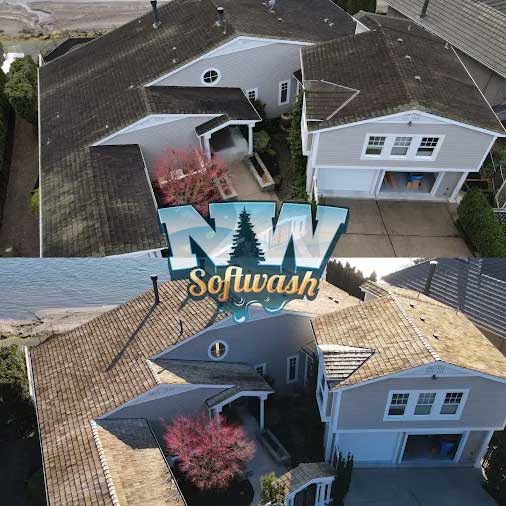
NW Softwash & Roof Cleaning in Washington — Professional Moss Removal That Protects Your Roof
Washington’s damp climate creates steady moss pressure across residential roofs. Our technicians understand how regional rainfall, shade, and debris affect different roofing systems. We tailor each service to local conditions and roof type.
Licensed and insured professionals use soft washing instead of pressure washing to protect shingles. Controlled, low-pressure application removes moss at the root without stripping protective granules. Crews follow structured safety procedures on every project.
Homeowners across Washington trust NW Softwash & Roof Cleaning for roof cleaning that removes moss safely and protects roofing materials.
Learn more about our process and schedule service at nwsoftwash.com. Protecting your roof today helps preserve its lifespan for years ahead.
FAQs: How to Clean Moss Off a Roof
Can I pressure wash moss off my roof?
No. Pressure washing can strip shingle granules and force water beneath roofing materials, which shortens roof life.
How long does professional moss removal last?
Professional moss removal typically lasts 2 to 3 years depending on shade, tree coverage, and overall moisture exposure.
Is moss on a roof really harmful?
Yes. Moss traps moisture against shingles and can lift edges over time, leading to faster deterioration.
What is the safest way to clean roof moss?
Low-pressure soft washing performed by trained professionals provides the safest and most effective method for removing roof moss.